

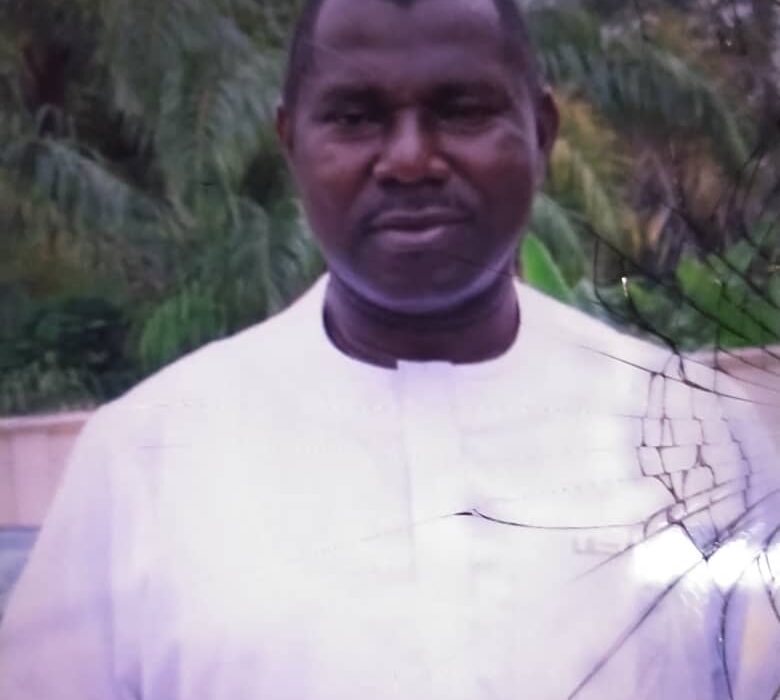
Festus Olutope Adebambo, was a caretaker chairman, who superintended over Akoko North-West Local Government Area of Ondo States door two years, who is now vying for the House of Representatives where he could do more. In this interview with our correspondent, he reveals his score sheet while in the local government and canvasses more reasons for his eligibility. Excerpts:
You were once a caretaker chairman of your local government, specifically, Akoko North-West.What were the concrete things you did while in office that could spur the electorate to vote for you to go for the House of Representatives?
My scorecard is loaded. One could safely call it stewardship, service and community transformation under my administration.
This record you are talking about is a reflection of stewardship – an account of responsibility entrusted, vision pursued and impact delivered. It is divided into two broad areas: my achievements at the local government level and my contributions to community development. Together, they represent a philosophy of governance rooted in participation, equity and practical results.
Before assuming office, I traversed the length and breadth of the local government, armed with a document I titled ‘The Working Document.’ It was more than a campaign paper – it was a covenant with the people, a statement of intent and a roadmap for development. Within it lay a vision not only for the local government, but also for my community, expressed through the Ogbagi Rapid Development Initiative ORDI.
Upon my appointment, that document became my creed. Yet, with gratitude to God and the cooperation of the people, the administration went beyond its promises. What began as a written vision evolved into tangible transformation across the eleven wards of the local government – the 10 political wards and the secretariat, often referred to as the ’11th ward.’
As chairman, I recognized early that development must not be imposed from above; it must rise from within the people. To achieve this, I established the Project Conception and Implementation Committees in each ward, including the secretariat. These committees, chaired by ward leaders, were tasked with identifying priority projects, proposing them to the council, and recommending local contractors for execution.
This model ensured three critical outcomes: community ownership, quality control through local supervision and equitable distribution of resources. Projects were not only executed – they were defended and protected by the very people they served. It was a practical demonstration of participatory democracy in action.
The local government secretariat, once seen as an administrative decay, was made a functional nerve centre under my administration. It was transformed into a functional and dignified hub of governance. The complex received a comprehensive facelift, including terrazzo-finished floors and modern office fittings. A 100KVA generator was procured, ensuring uninterrupted electricity during working hours – a first in the council’s history. You could see one of the reasons why I’m telling my people to let’s do it together once again at the higher level of governance.
Meanwhile, for two consecutive years, the council operated fully between 9 a.m. and 4 p.m., powered by consistent electricity. Offices were equipped with computers, photocopiers, and other essential tools, eliminating the outdated practice of outsourcing official documentation to private business centers.
A new executive office building was constructed and furnished to high standards, while the previously abandoned Kudirat Abiola Memorial Women Development Centre was completed and repurposed. It became home to the office of the chairperson, the community development department and a skill acquisition centre. Its multipurpose hall, furnished with one thousand chairs, emerged as a hub for social and developmental activities.”
What other record of laudable achievements were made during your tenure?
Additional investments included the refurbishment of abandoned tractors, procurement of a 30-ton tipper truck, acquisition of hydraform machines for construction, and expansion of the council’s vehicle fleet.
Lest I forget, recognizing that productivity is rooted in welfare, my administration placed significant emphasis on staff well-being. The secretariat environment was not only improved upon, but maintained to the highest standards. For the first time in its history, cleaning services were outsourced, earning the council recognition as the neatest in the state.
The lawns were manicured, waste management systems introduced, and gardeners equipped with modern tools. A previously unused canteen facility was revived and contracted to a caterer, providing quality and accessible meals for staff.
A borehole was sunk to ensure steady water supply, while a housing scheme led to the construction of residential buildings for key officials, including the Director of Local Government Administration and the Treasurer. Staff unions were supported with two Toyota Hiace buses for commercial operations, generating income used for welfare provisions.”
What was your level of the council’s relationship with the traditional rulers within and around your domain?
Thank you so much for this question. In acknowledgment of the role of traditional rulers, financial support was extended to 27 royal fathers in the local government. Grants were provided to enable them acquire or upgrade vehicles befitting their status. First-class rulers received higher allocations, while others were supported equitably. This initiative strengthened traditional institutions and enhanced their mobility and dignity.
In a way, development was not centralized – it was distributed. Across all ten wards, projects reflected local needs and priorities: health centres were constructed, renovated, and equipped; boreholes were drilled; electricity extended; markets developed; and roads constructed or rehabilitated.
From Arigidi to Okeagbe, Ikaram to Ajowa, Oke-Irun to Ogbagi, communities witnessed improvements in healthcare access, commerce and transportation. Culverts and drainage systems addressed erosion and flooding, while road networks opened up previously inaccessible areas, stimulating economic activity.
A notable achievement was the construction of a modern hospital at Ajuta, though it remains regrettably underutilized by subsequent administrations.
Beyond this, our governance philosophy was simple: the commonwealth must serve all.
To this end, financial transactions were restricted to banks within the local government, strengthening local economic institutions. Contracts were awarded to local contractors, ensuring that development spending circulated within the community.
In a way, resource distribution was restructured from ward-based allocation to polling unit-based sharing, correcting longstanding imbalances. Though effective, this reform required sustained political will, which subsequent administrations did not maintain.”
How did you manage programs that touched lives?
The administration implemented a wide array of programs targeting different segments of society and these include
Skill Acquisition: Youths were trained in vocational skills, supported with stipends, and linked with national programs for further empowerment.
For instance, transportation scheme; in collaboration with transport unions, this initiative improved internally generated revenue and reduced exploitation of drivers.
Agricultural Loans – Agbeloba: Cooperative societies accessed credit through partnerships with financial institutions, boosting agricultural productivity.
Indeed, healthcare innovation was introduced: The ‘Light Up the Labour Room’ initiative ensured that primary health centres were equipped with generators, guaranteeing safe deliveries at all hours.
Another area was Social Welfare: Elderly citizens received monthly stipends under the Owo Arugbo program, while youths engaged as information officers under ‘Eti-Oba’ initiative strengthened grassroots communication.
Microcredit – Kajola – was also introduced: In this wise, market women could access interest-free loans, stimulating local trade and economic resilience.
Ondo State is noted for education. What did you do as a local government chairman to uplift education at the local level?
Good question; we awarded bursaries to students, with special grants for law students, just as in other areas.
A distance learning centre affiliated with the University of Ibadan was established, marking a step toward higher education access within the community. Though later affected by operational challenges, its initial success demonstrated the viability of such initiatives.
Additionally, computers and ICT equipment were donated to community institutions, including the palace and youth centres, promoting digital literacy and access.
My administration was known to have also distributed equipment such as freezers, grinding machines, and motorcycles, among others to support livelihoods.
Beyond official duties, what other things were you known for during your tenure?
Beyond official duties, personal commitment to community development remained unwavering. Through ORDI, over 20 kilometres of roads were opened in Ogbagi under the ‘Sogbodilu’ initiative – a partnership between residents and leadership that transformed land access and urban layout.
Personal funds were invested in microcredit schemes, with over ₦4.5 million disbursed to cooperative groups. Efforts were also made to sustain road infrastructure through community fundraising and collaboration.
This scorecard is not merely a catalogue of projects – it is a testament to a philosophy of governance that values inclusion, accountability, and impact. It reflects a period where public office was approached not as a privilege, but as a duty to serve, to uplift and to leave institutions stronger than they were met.
While some initiatives have endured and others have faded, the underlying vision remains clear: sustainable development is achieved when people are empowered, resources are fairly distributed and leadership is guided by integrity. It is in the light of this that I’m seeking to be elected to the House of Representatives so that the dividends of democracy could go round.
In the final analysis, my record stands as both a reflection and a challenge – a reflection of what was accomplished and a challenge to future leadership to build upon it with courage, commitment and a renewed sense of purpose.”


